Categories
CUF In The News CUF In the news (show on home section)

Trump-Putin summit watched with ‘curiosity,’ hope by Ukrainians in Canada

By Sean Boynton – Global News

Posted August 15, 2025 4:00 am

U.S. President Donald Trump’s pivotal meeting Friday with Russian President Vladimir Putin is being watched with cautious optimism by Ukrainian Canadians, who are hopeful that Ukraine’s interests and rights will be upheld in the push to end the war.

Canada is home to the second-largest Ukrainian diaspora in the world, which grew larger after the country accepted Ukrainians fleeing Russia’s full-scale invasion.

While they distrust Putin’s willingness to negotiate a ceasefire or give up his territorial ambitions, community leaders say they appreciate Canada’s role in ensuring Ukraine has a seat at the table.

“We’re watching this with curiosity,” said Ihor Michalchyshyn, CEO and executive director of the Ukrainian Canadian Congress.

“I think we’re going to find out, is President Trump there to be an ally of Russia or an ally of Ukraine, or some third option?”

Trump has lowered expectations for what could emerge from the summit, saying Thursday he wants to “set the table” for a second meeting between himself, Putin and Ukrainian President Volodymyr Zelenskyy.

Those comments came after European leaders, along with Prime Minister Mark Carney, stood united in voicing “shared principles, including that decisions on the future of Ukraine must be made by Ukrainians” in a virtual meeting Wednesday that included Zelenskyy and U.S. Vice-President JD Vance.

Trump briefed Zelenskyy, Carney and European leaders on the upcoming summit with Putin in a call on Wednesday, and has promised to brief them again following the meeting.

“We feel that with Europe, with Canada, with Ukraine kind of speaking with one voice to the American president, he is listening,” Michalchyshyn said.

“We hope that this will be what he takes into the meeting with the Russians, but you never know … what Putin will do in a room with Trump.”

Canada has been one of the most vocal defenders of Ukraine since Russia first invaded and annexed Crimea in 2014, and particularly after Russia’s full-scale invasion began in February 2022.

That support has continued since Carney became prime minister earlier this year.

He hosted Zelenskyy at this summer’s G7 summit in Alberta, where Carney announced a new military aid package worth over $2 billion — pulled from previously-announced funding — as well as the first tranche of money backed by frozen Russian assets that will go toward rebuilding Ukraine following the war.

Carney affirmed in calls with Zelenskyy and British Prime Minister Keir Starmer this week that Canada welcomes Trump’s leadership in seeking an end to the war, but that Ukraine’s sovereignty and territorial integrity must be protected.

Canadians see ‘parallel’ between Ukraine, 51st state threats

Support for Ukraine has also come from Canadians themselves through humanitarian aid donations.

The Canada-Ukraine Foundation, which focuses on getting that aid delivered to Ukraine and other humanitarian efforts, says it has sent over $95 million to the country since 2022.

Valeriy Kostyuk, the group’s executive director, said there have been noticeable upticks in support and donations so far this year — particularly after Trump and Zelenskyy’s disastrous meeting in the Oval Office in February, but also following Trump’s threats to make Canada the 51st U.S. state.

“It’s a parallel,” he told Global News of the threats to Canada’s sovereignty.

“I think that experience allowed Canadians to relate a little bit more to the issues that started in 2014 (for Ukraine).”

Kostyuk said the CUF and other Canadian charities have helped fill some of the humanitarian funding gaps in Ukraine left by the dismantling of the U.S. Agency for International Development (USAID) earlier this year.

The CUF’s latest mission has been to try reuniting Ukrainian children forcibly removed by Russian forces with their families — an issue the Canadian government has been co-leading international efforts to resolve.

Over 19,000 Ukrainian children have been relocated to Russia, with many adopted by Russian families or held in “summer camps.”

Researchers and advocates say the goal is to erase the children’s Ukrainian identity and prepare them for military conscription when they become adults.

Former prime minister Justin Trudeau last year accused Russia of committing an “element of genocide.”

That Russian effort is symbolic of the need to stand up forcibly against Putin in negotiations, Kostyuk said.

Russia currently controls around a fifth of Ukraine’s territory, and Zelenskyy and the Europeans worry that a deal set by Trump and Putin could cement those gains.

Trump has acknowledged the possibility of “land-swapping” under a future deal, but has also promised to get some territory back for Ukraine.

Michalchyshyn said the focus for himself and the Ukrainian community is to ensure the prospect of giving up occupied territory doesn’t become a reality.

“Holding firm to the fact that Ukraine’s territorial integrity and decision-making processes are its own, and not being ceded to someone else or negotiated away — that there are key lines to hold to — that’s what we’re seeing is the most essential role of European and Canadian leadership at this point,” he said.

Zelenskyy has criticized any talk of Ukraine ceding any territory to Russia, noting Ukraine’s territorial borders are enshrined in its constitution and would require a referendum to alter.

Trump said Monday he’s “a little bit bothered” by that.

Kostyuk said there are historical parallels to what could emerge out of Friday’s U.S.-Russia summit.

“Quite often we compare the crossroad at which Trump currently is to Chamberlain’s approach of appeasing and dealing with Hitler,” he said, referring to the 1938 Munich Agreement that ceded the Sudetenland from Czechoslovakia to Germany.

Historians have criticized that deal for setting the stage for Hitler’s further incursions into Europe, and ultimately the Second World War.

“The sentiment from within the (Ukrainian Canadian) community has been consistent: that appeasement of the aggressor at the cost of the victim, which is Ukraine, is not going to bring a sustainable and just peace,” said Kostyuk.

“Supporting justice has been something that the community has been calling for.”

Categories
CUF In the news (show on home section) CUF In The News

The abducted Ukrainian children of the war with Russia

Guests and Topics:

-Valeriy Kostyuk

If you enjoyed the podcast, tell a friend! For more of the Ben Mulroney Show, subscribe to the podcast!

https://link.chtbl.com/bms

Also, on youtube — https://www.youtube.com/@BenMulroneyShow

Follow Ben on Twitter/X at https://x.com/BenMulroney

Enjoy

Learn more about your ad choices. Visit megaphone.fm/adchoices

Categories
CUF In The News CUF In the news (show on home section)

Canada’s Marsch bothered by U.S. treatment of Ukraine

The Canadian Press in TSN

TORONTO – Canada soccer coach Jesse Marsch, an American who won kudos north of the border earlier this year for telling U.S. President Donald Trump to “lay off the ridiculous rhetoric” about Canada being a 51st state, has taken aim at the U.S. president again.

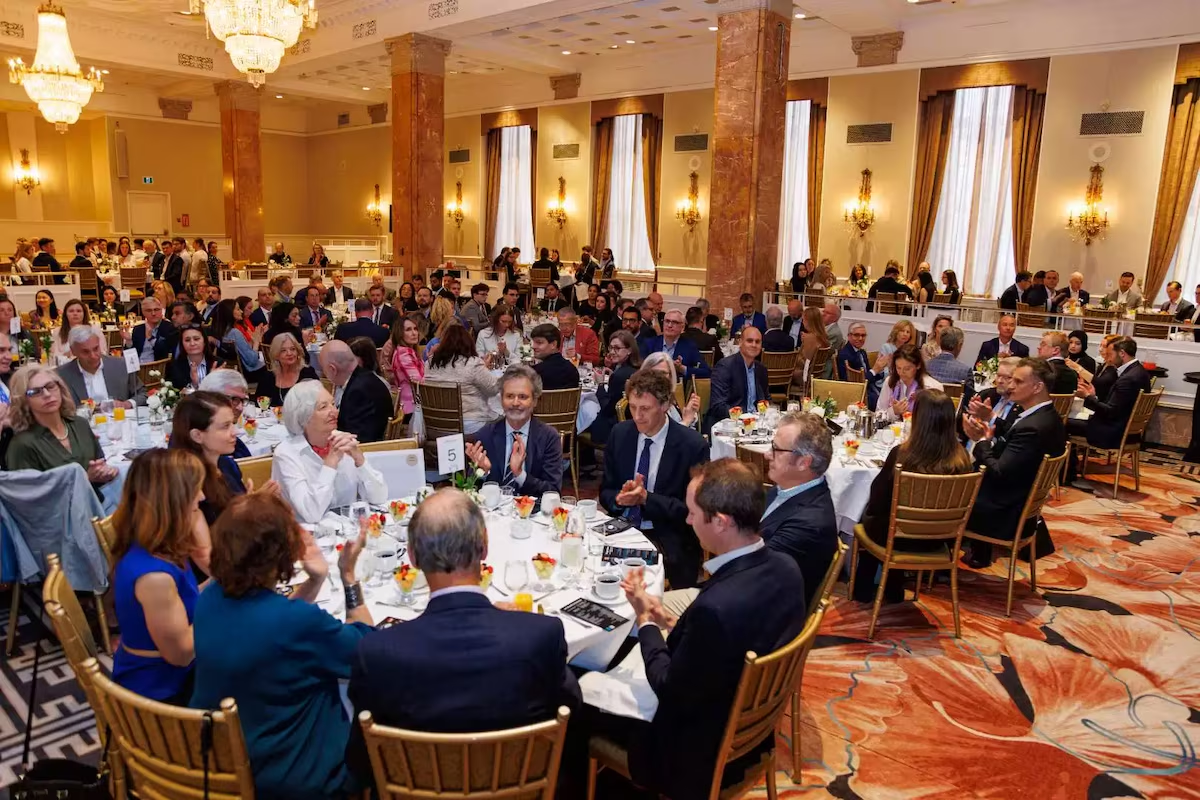
In a speech to a Canada-Ukraine Foundation breakfast Friday, Marsch made mention of the recent U.S. attitude towards Ukraine.

“As an American, the treatment that we have given the president of Ukraine and the lack of respect really bothers me,” he said. 

There was a contentious White House meeting in late February when Ukrainian President Volodymyr Zelenskyy was belittled by Trump and Vice President J.D. Vance. Trump has also lumped Ukraine and Russia together as aggressors when Ukraine was invaded by Russia in February 2022.

Canada hosts Ukraine on Saturday in the opening game of the inaugural Canadian Shield Tournament at Toronto’s BMO Field. New Zealand and Ivory Coast are also taking part.

“Without having to know what it’s like to go through something like what players, this coach, this federation has been through, I am just really excited to be able to show our support, as the Canadian national team coach, to show how much we are behind them, that we are with them, that we want to do everything we can,” Marsch told the breakfast.

The 51-year-old Marsch, a former U.S. international who was born in Racine, Wisc., said in February he was “ashamed of the arrogance and disregard that we’ve shown one of our historically oldest, strongest and most loyal allies (in Canada).”

The Canada Ukraine Foundation has raised more than $1 million at its fundraising breakfasts over the last three years.

A ball autographed by Andriy Shevchenko, president of the Ukrainian Association of Football, was auctioned off for $10,000 Friday after the former Ukraine star striker took part in a question-and-answer session.

This report by The Canadian Press was first published June 6, 2025

Categories
CUF In The News CUF In the news (show on home section)

Canada coach Jesse Marsch condemns U.S. treatment, ‘lack of respect’ for Ukraine

By Joshua Kloke

The Athletic, New York Times

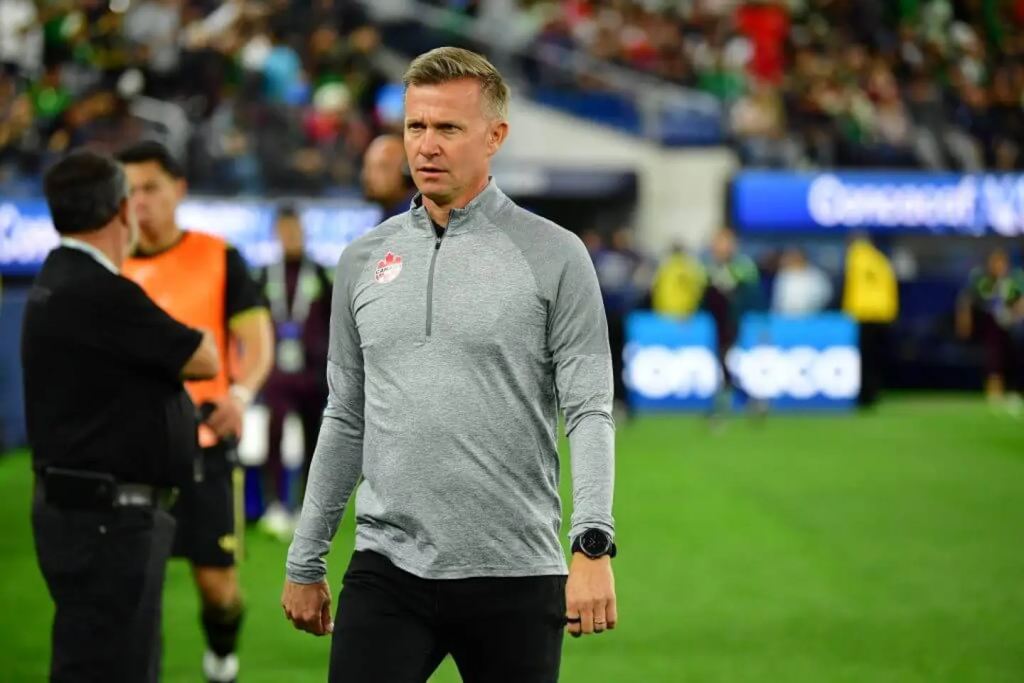
(Photo: Gary A. Vasquez / Imagn Images)

Canada men’s national team coach Jesse Marsch offered his support for Ukraine and the Ukrainian national team on Friday while also taking aim once again at United States President Donald Trump.

“As an American, the treatment that we have given the President of the Ukraine and the lack of respect really bothers me. Without having to know what it’s like to go through something like what these players, this coach and this federation has been through, I am just really excited to be able to show our support,” Marsch said in his opening remarks at a Friday morning event with the Canada Ukraine Foundation.

Marsch is likely referencing a tense and fiery exchange between Trump and Ukraine President Volodymyr Zelenskyy on Feb. 28 that made global headlines.

Marsch has previously taken aim at Trump, saying in February that Trump should “lay off the ridiculous rhetoric about Canada being the 51st state; as an American, I’m ashamed of the arrogance and disregard we’ve shown one of our historically oldest, strongest and most loyal allies.”

Due to the Russian invasion, the Ukrainian national team is required to play its matches in neutral venues.

“If you think about the challenges that the players from Ukraine have been through, they haven’t played a home match in several years, they’ve had to play World Cup qualifiers on foreign soil, they’ve had players playing professionally and internationally with the concern of the safety of their country and their family and their friends,” Marsch said. “In general, the ability for us to have empathy and sympathy for everything that their team, their nation, their team, their players have gone through is really important at a time like this.”

Ukraine’s upcoming home matches in UEFA Group D of 2026 World Cup qualification do not yet have a location.

“As the Canadian national team coach, to show how much we are behind them, we are with them, that we want to do everything we can,” Marsch said, noting that one of the beauties of international football is that it “can take on so much more than what the sport is.”

Ukraine is in Toronto to play Canada in the Canadian Shield friendly tournament on Saturday. Ukraine will play its second match of the Canadian Shield friendly tournament on Tuesday against New Zealand, while Canada plays Ivory Coast also on Tuesday.

“It’s really a pleasure and an honour to show that friendship and respect are at the core of everything we try to do in this sport,” Marsch said.

Categories
CUF In The News CUF In the news (show on home section) News

Pitching in: Fundraising for Canada-Ukraine Foundation

Paul Waldie, The Globe and Mail

The organizers: Bert Clark, Roman Dubczak and Tim Griffin

The pitch: Raising more than $1-million and climbing

The cause: The Canada-Ukraine Foundation

Roman Dubczak likes to joke that he’s probably the best-known Ukrainian-Canadian on Bay Street.

“I’m the only Roman,” he said with a laugh.

Mr. Dubczak was born and raised in Toronto and has spent more than 30 years with CIBC, where he is deputy chair of capital markets.His parents immigrated to Canada from Ukraine in the 1950s, and he has three cousins who live near Lviv.

Ever since Russia launched its full-scale invasion in February, 2022, there has been a flurry of donations to help various causes in Ukraine.

Bert Clark, chief executive of Investment Management Corporation of Ontario, wanted Toronto’s financial district to get involved as well. He organized the Bay Street Breakfast for Ukraine in 2023 and invited former Ontario premier and UN ambassador Bob Rae to speak. The event raised around $300,000 for the Canada-Ukraine Foundation to help fund its medical outreach programs in Ukraine.

Mr. Dubczak got involved as well along with Tim Griffin, former chief executive of Connor, Clark & Lunn Private Capital. They followed up with a second breakfast in June, 2024, featuring Nobel Peace Prize laureate Oleksandra Matviichuk, a Kyiv-based human-rights lawyer. That event also raised more than $300,000 for the foundation.

The group is planning a third breakfast on June 6, the day before Ukraine’s national soccer team plays Canada in the Canadian Shield Tournament in Toronto. The speaker will be Ukrainian soccer legend Andriy Shevchenko. The organizers are hoping to raise as much as $400,000, putting the total for all three events at more than $1-million.

Mr. Dubczak said he keeps in close contact with his relatives in Ukraine and supports several local initiatives. “It’s tough to call and say, ‘How’s it going?’” he said. “You feel you’re not doing enough.”

He has two sons and a daughter in their 20s and knows that if they were in Ukraine, the boys would likely be in the military. “You feel it. It’s drawn me in a lot more,” he added.

The group plans to hold the breakfast again next year when the emphasis will likely be on raising money to rebuild Ukraine. And while interest in the war has waned, Mr. Dubczak said, the Bay Street crowd is still very much engaged. “The awareness and the passion is very, very high on this topic.”

Categories
CUF In The News CUF In the news (show on home section)

In Ukraine, ‘demand for Canadian kindness’ grows

Article by Charles Lewis

For 11 years, Ukraine has been plagued by war, which began in 2014 with Russia’s illegal annexation of Crimea and Donbas region. Then, in an act of blatant aggression, Russia launched a full-scale invasion of Ukraine in February 2022. 

Part of the opening salvo was the indiscriminate bombing of cities, killing and maiming of civilian men, women and children. The aim was to destroy Ukraine and absorb what was left into Russia. However, to the surprise of Vladimir Putin and the world, Ukraine has still not succumbed. 

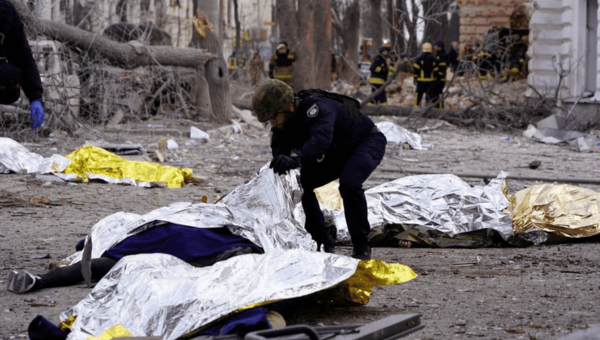
Ceasefires have been called for but with little success. While recent discussions were going on Russia sent missiles raining down on Sumy, killing 34 people, including two children, gathered to celebrate Palm Sunday. 

Valeriy Kostyuk is the executive director of the Canada-Ukraine Foundation (CUF), a group that raises money for aid projects to help Ukraine with medical assistance humanitarian aid. His message is simple: don’t abandon Ukraine. Even if the war ended tomorrow Ukraine would still need massive amount of help to rebuild. I recently had a sit-down with Kostyuk to discuss the three+ years of war that have engulfed Ukraine.

Charles Lewis: You were born in Ukraine. Personally, how has the war affected you? Go back to those first days more than three years ago.

Valeriy KostyukThe first days of Russia’s war on Ukraine were a rollercoaster of emotions. There was shock, disbelief and an overwhelming sense of urgency. My thoughts immediately went to those in Ukraine, my family, friends, and loved ones back home —  it was a terrible feeling. Those early days were filled with long hours, sleepless nights and an intense drive to ensure that Ukrainians, both here in Canada and back home, felt supported and heard. It was a mix of helplessness and determination. As much as I was worried, I knew I had to act to mobilize support and help in any way I could, and I began undertaking projects to support those in Ukraine. 

When the full-scale invasion began, in partnership with Lighthouse Immersive, I worked to bring the groundbreaking exhibition Immersive Shevchenko: Soul of Ukraine to North America, using digital art to showcase Ukraine’s cultural heritage during a critical time. This initiative not only raised vital awareness about Ukraine’s rich artistic traditions but also generated significant funds to support humanitarian efforts in my homeland during Russia’s invasion. This was an opportunity for me personally, with the help of my colleagues at that time, to feel less helpless. 

CL: Do you have family members affected by the war? 

Kostyuk:Like many in the Ukrainian-Canadian community, I have family and friends directly impacted. Some have been displaced and forced to flee their homes, while others have stayed to serve or provide humanitarian aid on the ground. Every day, I hear stories of resilience and heartbreak from loved ones struggling to rebuild their lives to those enduring unimaginable loss.

CL: What was Ukraine like for your growing up?

Kostyuk: I was born in Odesa, a beautiful city on the Black Sea coast. Odesa is known as the capital of humour and home to millions of happy-go-lucky people. Life in Odesa before the war resembled life in a Federico Fellini film. Today, it’s excruciating to see this beautiful city destroyed day after day by Russian missiles. 

CL: Given that U.S. President Donald Trump is holding talks with Ukraine and Russia, although finding an agreement will be difficult, are you worried Canadians will think there’s no more reason to give to your charitable group?

Kostyuk: The very complexity of our geopolitical situation reinforces the need for CUF’s work. While political talks, such as those involving Trump, are unfolding they don’t change the stark reality on the ground. The humanitarian crisis persists, and many face hardship, uncertainty and loss daily. For the Canada-Ukraine Foundation, our mission remains unchanged: to provide direct support to Ukrainians in need.

Canadians understand that political negotiations can be long and fraught with challenges, they know that such talks don’t equate to immediate relief for those suffering. Their generosity is driven by compassion for individuals whose lives have been upended by Russia’s war on Ukraine. 

Since the beginning of the full-scale invasion, Canadians through CUF have sent over $95 million worth of aid, which helped over six million people. The demand for Canadian kindness continues to grow. We have been blessed with Canadian generosity and hope that it will continue. Your readers can also become a part of the effort at the foundation (cufoundation.ca).

CL: Even if the war were to end today, I assume you would still need funds. But for what? What would be the most urgent needs? 

KostyukAbsolutely. Even if the war were to end today, the need for support would remain urgent and long-term. The devastation in Ukraine is immense and recovery will take years, if not decades. Our focus at the Canada-Ukraine Foundation would shift toward rebuilding Ukraine and humanitarian aid in several critical area’s power grids, medical aid including mental health support, helping displaced Ukrainians and the rescue of children abducted by Russia. However, now we continue to support Ukraine in all those sectors. There is never enough of any aid when one is at war.

CL: I’m sure you get good support from those of Ukrainian background in Canada. But what about other Canadians without that background? What would you tell them? Why should they care?

Kostyuk: We deeply appreciate the support from the Ukrainian-Canadian community, but this war impacts all Canadians, regardless of heritage. 

CL: Why?

Kostyuk: Ukraine’s fight is not just about Ukraine, it’s about defending democracy, human rights and global security. We can see the importance of this now more than ever as we see these issues reflected in our news cycles, with our sovereignty being threatened by the United States of America. It is a global fight for democracy and security and one we should all take very seriously.  

CL: How much of a shock was it to you to see Trump and JD Vance turn on Zelensky in that televised meeting? 

Kostyuk:Seeing Trump turn on President Zelensky was insulting and a shock to say the least. It was a profoundly unsettling moment, especially given what Ukraine is enduring, with Russia’s blatant war and attacks on a sovereign nation.

CL: Are you worried a Trump peace plan may include too much compromise on the part of Ukraine?

Kostyuk: Even if Trump’s stated goal is peace, I worry about the concept of “peace at any cost.” Just peace must be built on respect for Ukraine’s sovereignty and the well-being of its people, not on concessions that could undermine its security and justice. The danger lies in accepting any compromise that doesn’t account for the human suffering and sacrifices already made. Political negotiations must never overshadow the urgent humanitarian needs and the core values we stand for. There can be no peace without Ukraine involved in the conversation. 

CL: Is there any reason for the faithful to be particularly concerned? 

Kostyuk: Ukraine has fostered religious freedom and pluralism, allowing multiple Christian denominations and other faiths to worship freely. Churches across Ukraine — encompassing Orthodox, Catholic, Protestant and other denominations — coexist and serve their communities openly. In contrast, Russia has increasingly restricted religious expression, particularly targeting the diversity of faiths. Independent religious communities face harassment, property seizures and even imprisonment under anti-extremism laws. Many Christian denominations outside the Moscow Patriarchate have experienced severe limitations on their ministry. Supporting Ukraine means defending fundamental human dignity, religious liberty and the right of people to live according to their conscience.

Categories
CUF In The News CUF In the news (show on home section)

Opinion: Canada must lead on supporting Ukraine with Russia’s frozen assets

Open Letter: The next Canadian leader should set a powerful precedent against Russian aggression

By Special to National Post

Whoever wins Canada’s election next week will immediately face a decision with huge implications for global security and international law. At stake is the equivalent of US$300 billion of frozen Russian central bank reserves held in western currencies, C$22 billion of which is held in Canadian dollars. Given uncertainty among western allies, there’s no guarantee these assets will remain frozen.

Canada will soon host the G7, providing an invaluable opportunity to help stop hundreds of billions from going back to Russia should a European freeze lapse in July. If that happens, Russia will get a massive bailout, pay nothing for Ukraine’s reconstruction, and leave western taxpayers on the hook for both supporting Ukraine and our own defence.

We urge the Canadian government to support the immediate transfer of Russia’s frozen central bank reserves into a fund for Ukraine’s reconstruction and defence. Canada can lead by example and reaffirm that sovereignty, democracy and the rule of law are non-negotiable — and that we stand resolutely with Ukraine. European, G7 and other allies will be compelled to follow. In addition to supporting this asset transfer with its partners, Canada must signal its resolve by taking two policy measures.

The first is to ensure that the Canadian share remains in Canadian hands. The Finance Ministry can do this by segregating the assets into discrete accounts that Canada can independently freeze. The second measure is to pass Sen. Donna Dasko’s proposed amendments to Canada’s sanctions legislation, which would improve the legal basis to transfer Russia’s frozen funds held in Canadian dollars.

With uncertainty in Washington and the EU having to unanimously reaffirm sanctions every six months, there is significant risk countries like Hungary and Slovakia may veto an extension of EU sanctions, emboldened by the White House’s recent dovish turn on Russia. If that happens, Russia will be free to take back approximately $210 billion (USD equivalent), even though Canada and the vast majority of other allies oppose it. This would include the $22 billion Canadian share, unless the Finance Ministry segregates it.

A bailout for Vladimir Putin will strengthen Russia financially and militarily, unleashing hundreds of billions for Russia to wage war, possibly beyond the borders of Ukraine, including in Canada’s Arctic. Putin is estimated to have hidden US$300 billion in off-book debts to fuel Russia’s war effort. If these assets are returned, the West will have given him a bailout and be complicit in the destruction of Ukraine. For perspective, from 2022 to the end of 2024, Ukraine has received a total of US$445 billion in defence, humanitarian and financial assistance from countries around the world.

With Canada’s C$22 billion share being substantially higher than the aid it has provided to Ukraine since 2022, this is the single most important thing Canada can do right now for Ukraine to increase its resources and leverage — at no extra cost to the Canadian taxpayer. It would shatter Putin’s belief that he will have the funds to outlast western support. It would go a long way to securing a just and lasting peace.

Numerous prominent legal experts have supported the legality of seizing and transferring Russian sovereign assets under the international law doctrine of state countermeasures. Prominent economists and financial experts have stated it won’t harm financial stability.

As the next G7 host, we urge the winner of the upcoming election to demonstrate Canadian leadership at a critical time, setting a powerful precedent against aggression.

One Nanos poll shows over 80 per cent of Canadians in favour. Individual members of both major political parties and independent senators have already voiced their support. Canada is well-positioned to provide leadership.

All Canadian political parties and leaders should clearly articulate their position on this issue prior to the April 28 federal election, so that voters can take it into account. Canada has welcomed almost 300,000 displaced Ukrainians and the 1.4-million strong Ukrainian community is one of Canada’s largest ethnic communities. The message Canada sends them — and the world — must be clear: Canada does more than offer refuge and words. We take meaningful, courageous action and influence other nations to do the same.

Signatories:

The Right Honourable Stephen J. Harper, 22nd Prime Minister of Canada, 2006-2015

The Right Honourable Boris Johnson, 54th Prime Minister of the United Kingdom, 2019-2022

The Right Honourable Rishi Sunak, 56th Prime Minister of the United Kingdom, 2022-2024

Krišjānis Kariņš, 23rd Prime Minister of Latvia, 2019-2023

The Honourable Lloyd Axworthy, Minister of Foreign Affairs, 1996-2000

The Honourable David Collenette, Minister of Multiculturalism (1983-1984); Minister of National Defence and Minister of Veterans’ Affairs, 1993-1996; Minister of Transport (1997-2003)

The Honourable Allan Rock, Canadian Ambassador to the United Nations, 2004-2006 and Minister of Justice, 1993-1997

The Honourable Irwin Cotler, Minister of Justice and Attorney General, 2003-2006 International Chair of the Raoul Wallenberg Centre for Human Rights (RWCHR)

The Honourable Peter MacKay, Minister of Justice and Attorney General, 2013-2015, Minister of National Defence, 2007-2013 & Minister of Foreign Affairs, 2006-2007

The Honourable Ed Fast, Minister of International Trade, 2011-2015

The Honourable Chris Alexander, Minister of Citizenship and Immigration, 2013-2015 and Canadian Ambassador to Afghanistan, 2003-2005

Artis Pabriks, Deputy Prime Minister & Minister of Defence, 2019-2022 & Minister of Foreign Affairs, 2004-2007, Republic of Latvia

Kajsa Ollongren, Minister of Defence, 2022-2024 & Deputy Prime Minister, 2020-2022, The Netherlands

Lawrence H. Summers, US Treasury Secretary, 1999-2001

Natalie Jaresko, Minister of Finance, 2014-2016, Ukraine

Gabrielius Landsbergis, Minister for Foreign Affairs, 2020-2024, Republic of Lithuania

The Honourable Ed Stelmach, 13th Premier of Alberta, 2006-2011

Dr. Marie Bountrogianni, Ontario Cabinet Minister, 2003-2007 & Advisory Board Member, Eurobank e.g.g. business accelerator

The Honourable Thomas A. Lukaszuk, Deputy Premier of Alberta and Minister of Education, 2012-2013

Norman Spector, Chief of Staff to the Prime Minister, 1990-1992; Canadian Ambassador to Israel 1992-1995

Amb. John Herbst, US Ambassador to Ukraine, 2003-2006

The Honourable Donna Dasko, Independent Senator for Ontario

The Honourable Stanley Kutcher, Independent Senator for Nova Scotia

The Honourable Ratna Omidvar, retired Independent Senator for Ontario, 2016-2024

Borys Wrzesnewskyj, MP 2015-2019 & Founder, Canada-Ukraine Parliamentary Association, Former Chair, Canadian-NATO Parliamentary Association

General (Retired) Rick Hillier, Chief of the Defence Staff, 2005-2008

James C. Temerty, Chairman of Temerty Foundation; Founder, Northland Power

Bill Browder, CEO Hermitage Capital Management, Head of the Global Magnitsky Justice Campaign

Oleksandra Matviichuk, 2022 Nobel Peace Prize co-laureate; Founder, Center for Civil Liberties, Ukraine

Robert Zoellick, President of the World Bank, 2007-2012

Olivier Blanchard, Chief Economist, International Monetary Fund (IMF), 2008-2015; Senior Fellow, Peterson Institute for International Economics

Nazanin Afshin-Jam, Founder, Nazanin Foundation

Chantal Kreviazuk, Juno award-winning singer-songwriter; Founding Artist and Ambassador, War Child Canada

Heidi Yetman, President, Canadian Teachers’ Federation

Noah  Shack, President, Centre for Israel and Jewish Affairs

Raoul Wallenberg Centre for Human Rights (RWCHR)

Democratic Strategy Initiative (DSI)

Macdonald-Laurier Institute (MLI)

Montreal Institute for Global Security (MIGS)

David Edwards, General Secretary, Education International

Marcus Kolga, Co-Founder, Central and Eastern European Council in Canada; Director, DisinfoWatch; Senior Fellow, Macdonald-Laurier Institute and CDA Institute

Kyle Matthews, Co-founder and Executive Director, MIGS

Fen Osler Hampson, President, World Refugee & Migration Council

Jay Rosenzweig, CEO, Rosenzweig & Company;  Chair of RWCHR

Brandon Silver, International human rights lawyer & Director of Policy and Projects, RWCHR

Aaron Gasch Burnett, Co-Founder & Senior Fellow, Democratic Strategy Initiative

Balkan Devlen, Senior Fellow, MLI; Co-Lead, Pendulum Geopolitical Advisory

Yaroslav Baran, Chair of Board, Parliamentary Centre; Founding Partner, Pendulum; Board, Canada-Ukraine Foundation

Jonathan Berkshire Miller, Senior Fellow, MLI; Co-Lead, Pendulum Geopolitical Advisory

Matthew Bondy, CEO of Bondy & Associates; Senior Fellow, MLI

Richard Shimooka, Senior Fellow, MLI

Alexander Dalziel, Senior Fellow, MLI

Sheryl Saperia, CEO, Secure Canada

Adam Bolek, President and CEO, Canada Strong and Free Network

Bob Onyschuk, Partner (ret.) Gowling WLG International Law; Founding President CUCC

Jaime Pitfield, CEO, Parliamentary Centre

Alexander Lanoszka, Associate Professor, Balsillie School of International Affairs, University of Waterloo

Michael Cholod, Executive Director, Peace Coalition Foundation

Timothy Ash, Senior Sovereign Strategist, RBC Bluebay Asset Management; Associate Fellow, Chatham House

Philip Zelikow, 27th Counselor of the United States Department of State (2005-2007), Botha-Chan Senior Fellow, Hoover Institution, Stanford University

Anders Aslund, Senior Fellow, Stockholm Free World Forum

Yuliya Ziskina, International lawyer & Senior Legal Fellow, Razom for Ukraine

Tetyana Nesterchuk, Barrister, Fountain Court Chambers; UK expert at the Council of Bars and Law Societies of Europe

Jamison Firestone, Co-Founder, Global Magnitsky Justice Campaign

Katherine Vellinga, CEO, Zirkova Vodka; Board of Directors CUCC

Mariana Budjeryn, Harvard Kennedy School’s Belfer Center for Science and International Affairs; Author “Inheriting the Bomb”

Heather Bakken, Founding Partner, Pendulum Group

Stephen Leckie, CEO Canada’s Culinary Championships; CEO Canada’s Great Kitchen Party

Rupert Murray, Marine Conservationist and Filmmaker, United Kingdom

Iranian Justice Collective, “Woman, Life, Freedom” Iranian diaspora movement, Canada

League of Ukrainian-Canadian Women (LUCW)

Canada-Ukraine Foundation (CUF)

Canada-Ukraine Chamber of Commerce (CUCC)

Ukrainian-Canadian Professional and Business Federation (UCPBF)

Ukrainian-Canadian Bar Association (UCBA)

Kelowna Stands With Ukraine (KSWU)

Categories
CUF In The News CUF In the news (show on home section)

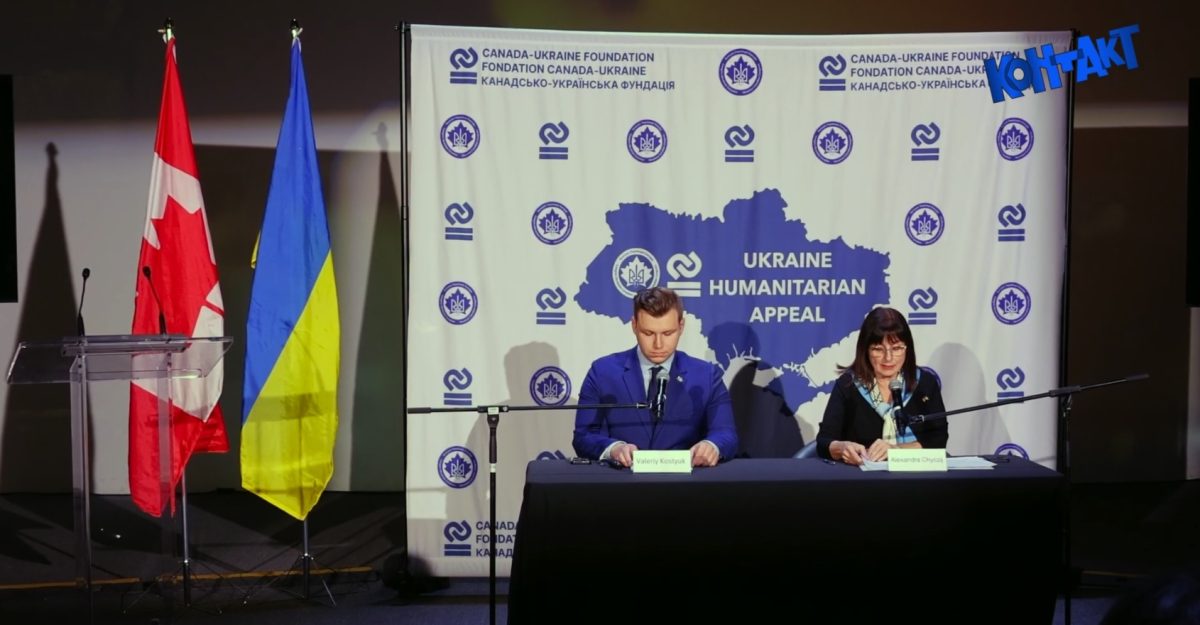
Три роки гуманітарної допомоги Україні: пресконференція Канадсько-української фундації та Конґресу українців Канади

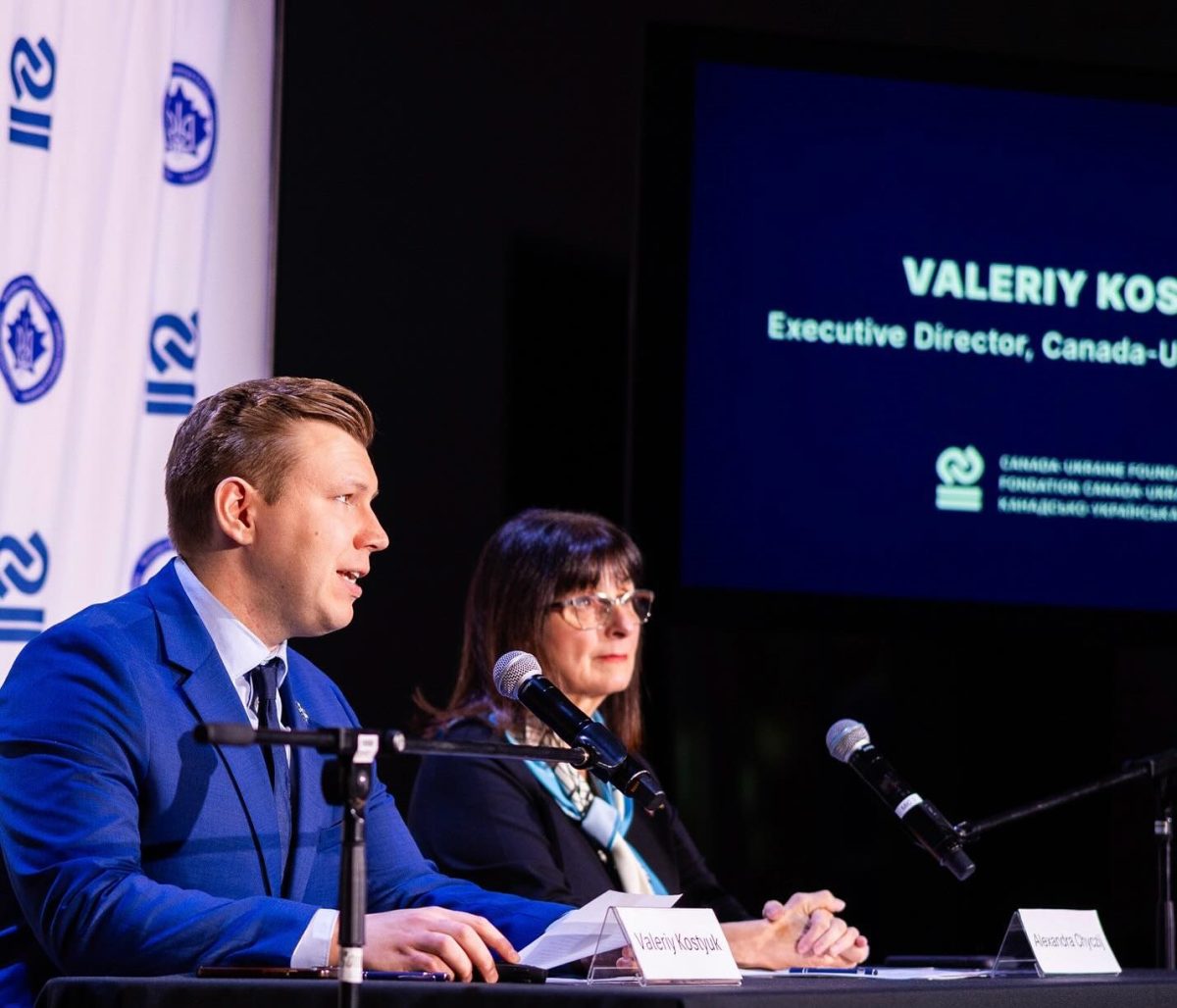
Виконавчий директор КУФ Валерій Костюк промовляє на пресконференції

Катерина Озерянська, LJI Reporter для НШ-УВ

Напередодні третьої річниці повномасштабного вторгнення Росії в Україну в приміщенні Lighthouse Artspace на вулиці Yonge Street у Торонто відбулася пресконференція, організована Канадсько-українською фундацією (CUF) та Конґресом українців Канади (КУК). Захід зібрав представників уряду, дипломатичного корпусу та української громади, які обговорили оновлену інформацію про діяльність CUF-UCC Ukraine Humanitarian Appeal та наголосили на важливості подальшої підтримки України з боку Канади та міжнародної спільноти.

Підсумки гуманітарної діяльності

За три роки з початку широкомасштабної війни в Україні через CUF-UCC Ukraine Humanitarian Appeal було зібрано 73 мільйони доларів на гуманітарну допомогу та отримано майже 22 мільйони доларів у вигляді товарної підтримки, що в сумі становить близько 95 мільйонів доларів.

Загалом на критично важливі програми допомоги було виділено 92 мільйони доларів, що дозволило підтримати понад 6 мільйонів людей. Ці кошти були спрямовані на забезпечення продовольством, медичною допомогою, тимчасовим житлом та іншими життєво необхідними ресурсами в межах CUF-UCC Ukraine Humanitarian Appeal.

Валерій Костюк, виконавчий директор CUF, подякував канадцям за їхню щедрість і зазначив, що гуманітарна підтримка України залишається життєво необхідною:

«За три роки нашої роботи ми бачили надзвичайну єдність канадців. Від узбережжя до узбережжя люди демонстрували готовність допомагати. Ця допомога – це не просто цифри, а реальні врятовані життя. Коли українці звертаються до канадців у час найбільшої потреби, вони отримують реальну підтримку».

Виступ Олександри Хичій: політичні виклики та заклик до дій

Президент Конґресу Українців Канади Олександра Хичій наголосила на надзвичайних викликах, з якими стикається Україна, та критичній необхідності рішучих дій з боку міжнародної спільноти. Вона підкреслила, що слабка реакція Заходу на окупацію Криму та Донбасу у 2014 році сприяла подальшій агресії Росії, яка переросла у повномасштабне вторгнення. Сьогодні українці продовжують боротися за свою незалежність і підтримка союзників залишається життєво необхідною.

Олександра Хичій нагадала про жахливі злочини, скоєні російською армією в Україні: масові страти, тортури, зґвалтування та викрадення дітей, що є актом геноциду. Вона зазначила, що понад 200 000 українських дітей були викрадені Росією, а багато з них насильно всиновлені або відправлені у так звані “табори перевиховання”. Україна вже задокументувала майже 160 000 воєнних злочинів, а обстріли цивільної інфраструктури, лікарень і шкіл не припиняються жодного дня.

Окремо вона звернула увагу на нестабільну геополітичну ситуацію, зокрема на потенційні загрози, що виникають через позицію президента США Дональда Трампа. Вона наголосила, що Канада та Європа повинні розробити спільний план дій для зміцнення власної безпеки та збільшення військової допомоги Україні.

Завершуючи свій виступ, Олександра Хичій закликала всіх канадців зробити свій внесок у підтримку України, долучившись до ініціативи CUF-UCC Ukraine Humanitarian Appeal.

Конкретні ініціативи CUF-UCC Ukraine Humanitarian Appeal

– Медична допомога: CUF та партнери переобладнали п’ять пасажирських автобусів у мобільні шпиталі, що працюють у регіонах України, а також провели дві місії хірургічної допомоги у Польщі у 2024 році. Також триває розширення програми медичної допомоги, яка вже врятувала тисячі життів.

– Гуманітарне розмінування: Було проведено обстеження 78 квадратних кілометрів території та навчено 19 000 цивільних осіб правилам безпеки щодо вибухонебезпечних предметів. Для цієї роботи використовується спеціально підготовлений пес «Torch» із Канади.

– Зимова підтримка: Завдяки зібраним 2,3 мільйонам доларів передано понад 450 дров’яних печей, сонячні павербанки та 1000 ліжок для переміщених осіб в Україні. В умовах обстрілів і знищення енергетичної інфраструктури ця допомога є критично важливою.

– Ментальне здоров’я: CUF організувала понад 10 000 годин групових та індивідуальних консультацій для ветеранів та цивільного населення, а також навчання для нових терапевтів.

– Енергетичні проєкти: Закуплено 32 гібридні генераторні установки для лікарень у Миколаєві та Херсоні, 37 систем збереження енергії для екстрених служб.

– Програма порятунку дітей: Разом із Save Ukraine та Temerty Foundation інвестовано 220 000 доларів у програму порятунку та реабілітації дітей, викрадених Росією.

Кампанія “Even the Brave Struggle”

Під час заходу було представлено відеозвернення генерала Ромео Даллера, відомого канадського військового лідера та гуманітарного активіста, який долучився до кампанії “Even the Brave Struggle”. У своєму виступі він поділився власним досвідом роботи з ветеранами та розповів про свої враження після відвідування України, наголошуючи на необхідності міжнародної підтримки:

«Війна – це не просто пекло, це живе пекло. Українці платять жахливу ціну, але вони не зломлені. Наше завдання – підтримати їх у цій боротьбі», – сказав генерал у своєму зверненні.

Заклик до дії

Як показують ці три роки невпинної гуманітарної роботи, солідарність Канади з Україною є потужною та дієвою. Однак війна триває, і потреба у підтримці залишається гострою. Усі пожертви до 1 мільйона доларів, зроблені до 6 квітня на підтримку кампанії “Even the Brave Struggle”, будуть подвоєні фундацією Myhal Family Foundation.

«Коли вразливі громади України потребують допомоги, канадці діють. Ми продовжуємо цю боротьбу. Час діяти зараз», – наголосив Валерій Костюк, виконавчий директор Канадсько-Української Фундації.

Докладніше про кампанію та можливості підтримки можна дізнатися на сайті www.cufoundation.ca

Categories
CUF In The News CUF In the news (show on home section)

Canada-Ukraine Foundation announces $73 million for humanitarian aid to counter Russian Terror

Categories
CUF In The News CUF In the news (show on home section)

Canada’s Trudeau government stands with Ukraine while Trump administration steps closer to Russia as war enters fourth year

Christopher Guly

The Ukrainian Weekly

OTTAWA – After U.S. President Donald Trump accused his Ukrainian counterpart of being a “dictator without elections” and warned Volodymyr Zelenskyy in a Truth Social post that he “better move fast or he is not going to have a Country left,” American and Russian officials began peace talks in Saudi Arabia, while shortly after Canadian Prime Minister Justin Trudeau insisted that such negotiations must include Ukrainian representation.

“It’s a fundamental principle for Canada, and for the vast majority of our allies, that nothing about Ukraine without Ukraine,” he said at a February 19 news conference in Montreal.

“Ukrainians have been fighting and dying – not just to protect their sovereignty [and] territorial integrity,” said the prime minister, who attended a peace and security summit in Kyiv with 12 other world leaders on February 24 as Ukraine marked the third anniversary of Russia’s invasion. It was Mr. Trudeau’s fourth visit to the country since the full-scale war began.

“They’re also fighting to protect the rules-based order that keeps us all safe around the world and has for close to 80 years now,” the prime minister said at his February 19 press conference.

“This period of peace, stability, prosperity for the world happens because we had rules around borders, around not invading your neighbors, that Russia chose deliberately to violate a number of years ago,” he added.

Mr. Trudeau said that “puts at risk not just Ukrainians’ ability to determine their own future,” but that “it puts at risk all of our democracies, all of the rules that keep us safe and prosperous.”

“That is why Canada and our allies are unequivocal on standing up against [Rus­sian President] Vladimir Putin’s illegal, im­moral, unjust violations of the international order,” the prime minister told reporters.

The following day, Mr. Trudeau spoke to Mr. Zelenskyy, and, according to a readout from the prime minister’s office, told the Ukrainian leader that “Canada will always stand in defense of Ukraine and [Mr. Trudeau] emphasized that there can be no sustainable peace in Europe without security for Ukraine.”

On February 18, in a virtual news conference from Brussels, Canadian Foreign Affairs Minister Mélanie Joly said that Canada would like to play a peacekeeping role in Ukraine whenever the war with Russia ends.

“We want to be part of these conversations regarding security guarantees,” she said. “We want to be part of conversations linked to more Canadians being involved in protecting Ukraine.”

Ms. Joly, who took part in the Munich Security Conference, which Mr. Zelenskyy also attended, said that “many Canadians have been inspired by what is going on in Ukraine because we know they’re fighting for the right reasons.”

“We can’t let Russia go unchecked,” she said.

Canadian parliamentarians were also in Brussels to attend the North Atlantic Treaty Organization (NATO) Parliamentary Assemb­ly’s Defense and Security, Economics and Security, and Political committee meetings in mid-February.

In a statement, Canada’s delegation said that it told the assembly that “Canada stands with Ukraine and insists that any peace plans include the full participation of Ukraine and Europe – and we reaffirmed our support for the territorial integrity of Ukraine.”

“Now is not the time to be silent on any attempts to undermine the international rules-based order,” said the Canadian NATO Parliamentary delegation, which was included five members of Parliament and five senators representing different political parties and groups.

Former Canadian Foreign Affairs Minister Lloyd Axworthy is among prominent Canadians who have raised their voice in support of Ukraine.

“Ukraine may soon find itself outmuscled,” he wrote in a February 19 Globe and Mail commentary. “If Mr. Trump and Mr. Putin negotiate a settlement, Ukraine could be forced into territorial concessions or a weakened sovereignty.”

“This should serve as a wake-up call for Canada,” said Mr. Axworthy, who in his commentary highlighted the threat of annexation from Mr. Trump, “who seeks to erode our sovereignty and absorb us into his imperfect union.”

“Ukraine’s struggle shows the dangers of underestimating authoritarian threats, of relying too much on U.S. protection, and of failing to build strong alliances,” he said.

In a February 19 statement, Ukrainian Canadian Congress (UCC) President Alexandra Chyczij called Mr. Trump’s accusation that Ukraine started the war with Russia, which she characterized as a “genocidal invasion, … as revolting as it is false.”

“[Mr.] Trump’s insults” and his “undermining of Ukrainian sovereignty will only encourage Russia to further aggression against Ukraine and Ukraine’s neighbors,” she said.

“[Mr.] Trump has demonstrated that he is a willing instrument of the Kremlin and the war criminals who run Russia today,” she said.

In an interview, Ms. Chyczij told a correspondent for The Ukrainian Weekly that she didn’t believe Ukraine or the European Union “would accept a deal that the Americans negotiate.”

She said that “for someone who calls himself a master of the art of the deal,” Mr. Trump’s “negotiating strategy is quite weak.”

“He’s got nothing left to give, unless his intention all along was to give the store away,” she said.

She added that the “average Ukrainian is shocked by the position of the Trump administration” and feels “betrayal and fear about what the future holds.”

Members of Mr. Trump’s cabinet have pushed Ukraine into making concessions.

On a February 12 visit to Kyiv, U.S. Trea­sury Secretary Scott Bessent presented the Zelenskyy administration with a proposal that Ukraine provide the U.S. government with 50 percent of the revenue from some key Ukrainian resources, including minerals, oil and gas, since the U.S. “has provided significant and material support to Ukraine since Russia’s invasion of Ukraine in Feb. 2022,” according to an apparent draft document reviewed by ABC News.

Mr. Zelenskyy refused to sign the deal, and at a February 19 news conference in the Ukrainian capital, he said: “I told them to show the security guarantees, and then we talk about the percentage. They said 50 percent and I replied, no. I can’t sell the country off.”

“Besides, around 20 percent of resources are in Russia-occupied territory,” the president added.

Meanwhile, during a February 13 news conference in Brussels, following a NATO defense ministerial meeting, U.S. Defense Secretary Pete Hegseth said that “returning to Ukraine’s pre-2014 borders is an unrealistic objective,” referring to Russia’s initial invasion of Ukraine when it seized the Crimean Peninsula and portions of the Donbass in Ukraine’s east. At a news conference a day later, Mr. Hegseth walked back that assertion when he said that “everything is on the table.”

Ms. Chyczij expects that it will be “a tough sell for the Ukrainian military – a tough sell for every Ukrainian family who has lost someone in this war to accept what essentially looks like capitulation. They will ask themselves ‘What have we spent the last three years doing?’”

She said that, if “U.S. military aid is not replaced with increased European military aid,” a “concession of sorts” could result.

“But it will not be a long-lived one,” said Ms. Chyczij, who was in Kyiv last June as part of a Canadian government trade mission.

“You will have a million veterans of the war with military experience and weapons, and you could see an insurgency that you’ve never seen before,” she said, noting that such a scenario played out following the end of World War II when the Ukrainian Insurgent Army fought against the Soviet Union until 1949.

If there is any ceasefire, “Putin will not respect” it, Ms. Chyczij said.

She added that “there is no universe in which Putin will respect a ceasefire. He’s not going to be satisfied with just Donbas and Crimea. His stated goal has been [to claim] all of Ukraine and in fact the reconstitution of the USSR. I don’t think there any prospects for peace in any event. So, for that reason alone, the fighting will continue.”

That outcome could also “demonstrate to [Mr.] Trump that Putin has fed him a bunch of lies” and “had no intention of abiding [by] any peace agreement,” said Ms. Chyczij, who has family members in western Ukraine.

She explained that for the UCC the ongoing war has created the sizable challenge of supporting as many as 300,000 displaced Ukrainians in Canada “who are facing the expiration of their work permits” and “many in government may have believed [Mr.] Trump would broker some form of peace deal that would allow Ukrainians to return home.”

“This has been a rude awakening for our immigration department that this may not happen soon [and] that [Mr.] Trump is not a reliable partner,” she said.

On the positive side, the Canada-Ukraine Foundation (CUF) has raised about $67 million in cash and in-kind donations (in the form of equipment) for humanitarian aid to Ukraine since the war began three years ago. The support has helped more than six million people in Ukraine through food assistance, medical aid, shelter and “other life-saving support,” according to the CUF, the largest Ukrainian-Canadian charitable organization.

However, the foundation faces its own challenge to help fill in the gap left by the Trump administration’s plan to shut down the U.S. Agency for International Aid (USAID), which provided Ukraine with $37.6 billion in humanitarian aid, development assistance and direct budget support since the start of Russian’s full-scale invasion.

“Over the last couple of weeks there’s been a significant amount of organizations in Ukraine that have relied heavily on the support from USAID, which has been cut – and they are now looking for other avenues,” said Ukrainian-born Valeriy Kostyuk, executive director of the CUF, who added that he did not know the extent of the reduction in American humanitarian support for Ukraine.

“From the standpoint of the Canada-Ukraine Foundation, we have to increase our capacity to fundraise and deliver aid to Ukraine quickly and efficiently because there are a lot of gaps to fill,” he said.

Within the humanitarian-aid community, “the United States is becoming viewed as being unreliable,” Mr. Kostyuk said.

On February 13, the CUF launched an “Even the Brave Struggle” campaign to address the psychological toll the protracted war has had on people.

“The mental-health injuries that Ukraini­ans are currently developing are becoming deeper and deeper as they’ve been pushing off the Russians for three years, and right now Ukraine’s number one ally is changing its rhetoric 180 [degrees],” said Mr. Kos­tyuk, a former theatrical and cultural projects producer who has lived in Canada for nearly two decades but has family in Ukraine.

“My closest people cannot sleep at night because of Russian attacks,” he said about Russia’s mid-February massive drone attack on his hometown of Odesa that cut power and heating to nearly 90,000 residents of the city located in Ukraine’s south.

“It’s quite an intimidating thought to live with that someone’s rhetoric or decision can take away an opportunity for me to keep going home,” Mr. Kostyuk said of Mr. Trump’s talk on Ukraine, adding that his “worst nightmare” is that Russia could completely control the country he visits regularly to swim in the Black Sea and where he enjoys “a pint of local beer from one of my favorite microbreweries.”

“Some of my friends had to leave Odesa; some of my relatives had to leave Ukraine,” he said. “I had to move my grandmother to Toronto, and she lives not too far away from me now.”

But Ukraine is not in an entirely hopeless situation, according to Ms. Chyczij.

The $300 billion in Russian assets seized by the West could be repurposed to reconstruct the country.

She said that Ukraine is also developing its own military industrial complex, including homegrown drone manufacturing that could both allow the country to become more self-sufficient on the defense front and become a major military supplier within Europe.

Mykhailo Fedorov, Ukraine’s first deputy prime minister for innovation, education, science and technology, told CBC News that the country produced more than 1.5 million unmanned aerial vehicles (UAVs) last year.

A recent report by two research fellows at the London-based Royal United Services Institute for Defense and Security Studies found that Ukrainian tactical UAVs have accounted for between “60 and 70 percent of damaged and destroyed Russian systems.”

In terms of Canada’s relationship with Ukraine, Ms. Chyczij said that “Prime Minister Trudeau and Foreign [Affairs] Minister Joly have set the tone by stepping up and speaking in defense of President Zelenskyy and reaffirming Canada’s support for Ukraine.”

Mr. Trudeau’s term as prime minister and leader of the Canadian Liberal Party ends on March 9 when his successor will be named following a Liberal leadership race that includes former deputy prime minister Chrystia Freeland – a Ukrainian Canadian and vocal defender of her ancestral homeland – and Mark Carney, the former governor of the central banks of England and Canada, who is the frontrunner in the contest.

Canadians could also be headed for a general election this spring should the Liberal minority government fall in a vote of non-confidence in the House of Commons. Based on recent polling numbers, the Official Opposition Conservatives, under their leader, Pierre Poilievre, would form a majority government.

Ms. Chyczij said that she has had “one 15-minute meeting” with Mr. Poilievre.

“He listened but was non-committal, and we have been waiting for a platform on how the Conservatives would support Ukraine,” she said.

On February 24, 2024, at a rally in Hamilton, Ontario marking the second anniversary of the Russian invasion of Ukraine, Mr. Poilievre said that the Conser­vatives would “continue to stand with the Ukrainian people against the illegal, unjustifiable and ego-driven bloodshed initiated by Vladimir Putin.”